
Mascot logos: what they are and when to use one
A mascot logo uses an illustrated character as the face of a brand. Characters build warmth, personality, and a memorable voice, which is why sports, food, and family brands love them. The trade-off is upkeep: a mascot needs a full set of rules and a simplified version, or it will not scale to small sizes.
On this page
What is a mascot logo?
A mascot logo is one of the seven logo types: it uses an illustrated character — a person, animal, or invented creature — as the brand's face. Where a symbol is abstract and quiet, a mascot is expressive; it can appear in different poses, react, and star in campaigns.
Why mascot logos work
Characters do something no abstract mark can: they give a brand a personality you can relate to. That drives real advantages — warmth, memorability, and a flexible storytelling device that can front ads, packaging, and social content. For brands that communicate constantly, a mascot becomes a familiar friend.
Which brands should use one?
Mascots fit brands built on warmth, energy, and frequent communication: sports teams, food and drink, snacks, kids' and family products, and community or local brands. They fit less well for brands that need to feel minimal, premium, or strictly corporate, where a geometric or minimalist mark reads better.
The trade-offs
A mascot asks for more than a simple mark:
- More rules. Expressions, poses, cropping, and color must all be defined so the character stays consistent — the job of brand guidelines.
- Harder to scale. A detailed character can turn to mush at favicon size.
- Ages faster. Illustration styles date, so a mascot needs occasional, careful updates.
How to design a mascot that scales
- Start from a concept, not a drawing — what the character is and how it behaves.
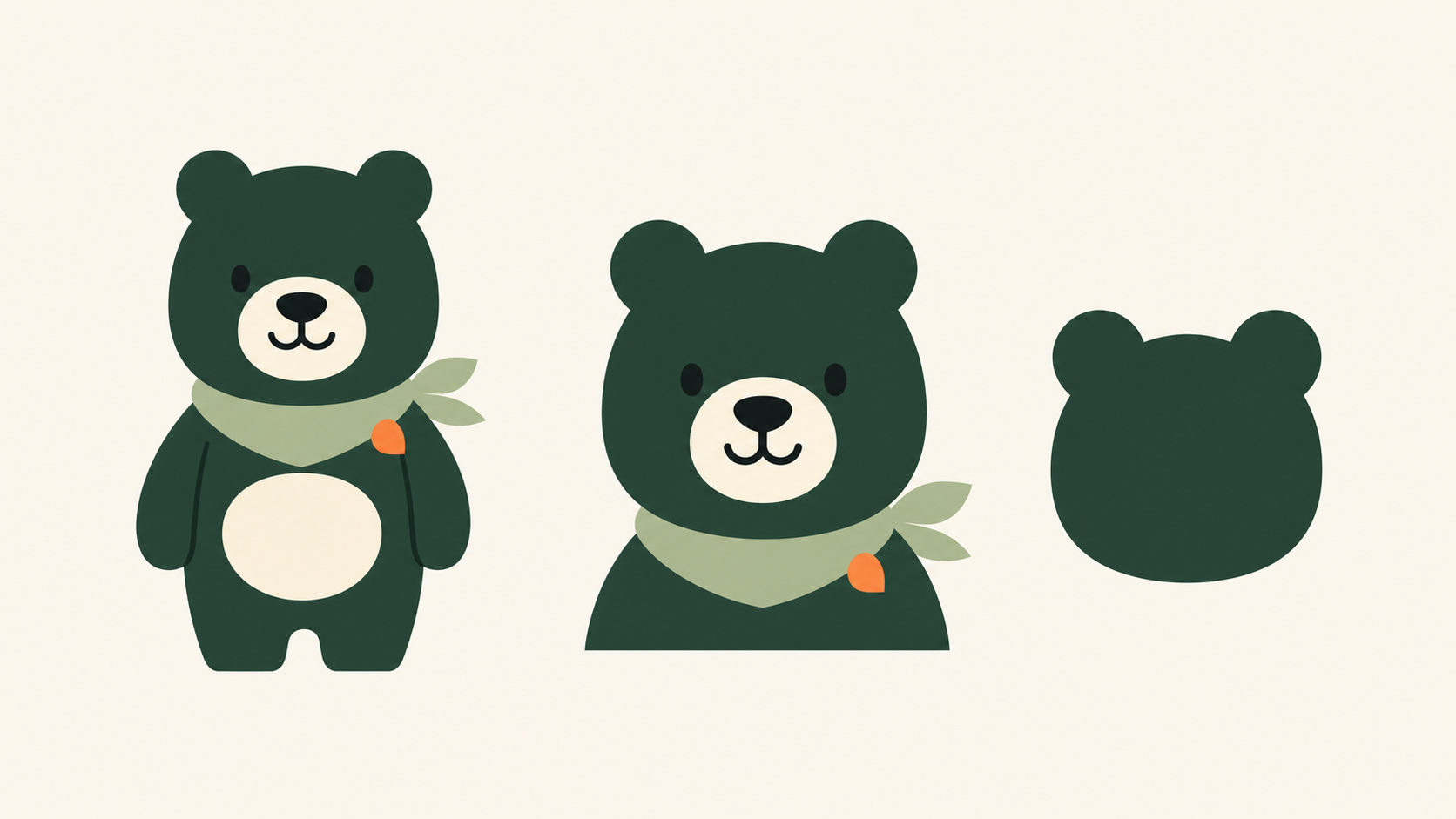
- Give it a clear silhouette. This can help recognition, but test the approved small version in the actual avatar crop and on a print sample at its intended size; a silhouette does not guarantee legibility at every size.
- Design versions. A detailed full illustration, a simplified mid version, and a tiny single-color icon for favicons and avatars.
- Keep it appropriate as the brand grows, and update the style occasionally rather than never.
When you are ready, here is how to make a logo, step by step.
What belongs in the logo, and what belongs in character content?
A brand character can wave in a video, teach in a guide or wear seasonal clothing without every drawing becoming a new logo. The logo variant needs a stable identifying form. Define the approved pose or head, silhouette, name relationship and colors; keep campaign illustrations in a separate part of the brand system.
For the fictional Piko Bakery, a friendly bird carries a tray on packaging. Its avatar uses the same head without the tray, fingers or crumb details. If simplifying removes the distinctive beak, the result is a generic circle rather than a usable small mascot. Preserve that feature and test the real crop.
The fictional Orbit Juniors club uses a comet character on its entrance sign. A waving arm works in posters, but a different face in each version weakens identification. Fix the face and proportions; let the campaign pose change around those constants. Check the sign from normal arrival distance, not just close-up.
| Application | Likely failure | Practical correction |
|---|---|---|
| Bakery packaging | Smile disappears in one ink | Open the mouth shape and remove tiny teeth |
| Profile avatar | Full-body mascot becomes a dot | Use the approved head with safe margins |
| Club sign | Character overwhelms the readable name | Rebalance character and wordmark in the sign layout |
Approve the small logo separately from the detailed illustration. A clear silhouette helps, but does not guarantee recognition at every size. Review the actual files and materials before treating the character as ready for launch.
Related practical guides: Logo testing checklist: 10 checks before you launch · Logo design trends 2026: what is useful for your brand?
Start your brand's logo — it's freeFrequently asked questions
What is a mascot logo?
A mascot logo is built around an illustrated character — a person, animal, or invented creature — that acts as the face and voice of the brand, adding personality and warmth.
What brands should use a mascot logo?
Mascots suit brands that communicate often and want warmth and personality — sports teams, food and drink, kids' and family products, and community-facing brands.
What are the downsides of a mascot logo?
They need more rules than a simple mark (poses, expressions, simplified versions), they can be harder to scale to tiny sizes, and a dated character can make a brand feel dated too.
How do you make a mascot logo work at small sizes?
Design a simplified, single-color version — often just the silhouette — from the start, so the mascot still reads as an app icon, favicon, or small avatar.