
When to rebrand (and when not to)
Rebrand when the brand no longer fits the business — because it looks dated, you have outgrown your positioning, or you have pivoted, merged, or picked up baggage. Do not rebrand out of boredom or to chase a trend. And most of the time you need a refresh, not a from-scratch reinvention that throws away the recognition you have built. Choose a change that matches the evidence.
On this page
What counts as a rebrand?
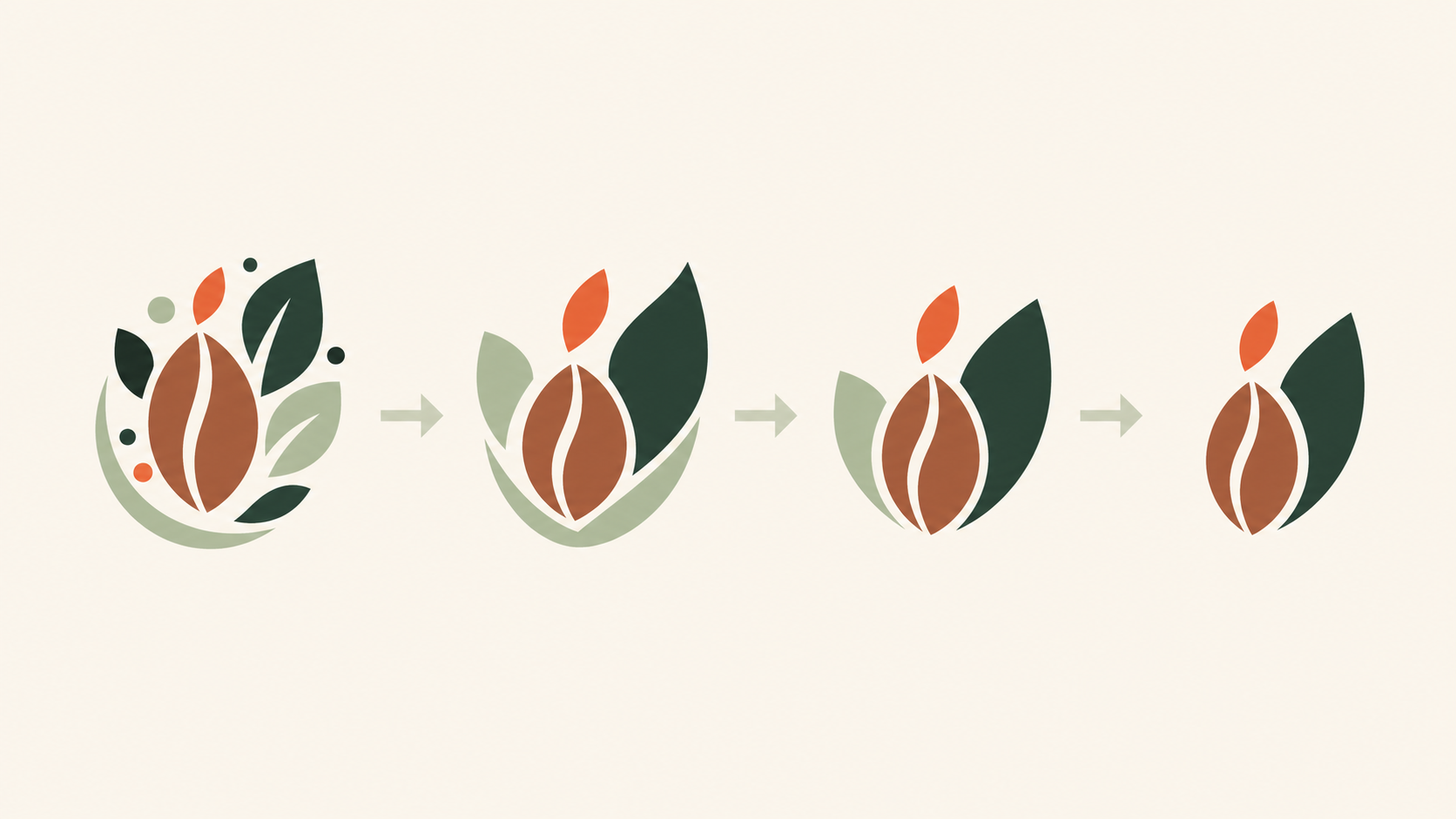
A rebrand changes how a brand presents itself. It sits on a scale: at one end a light refresh — a cleaner logo, updated colors, a tidier system — and at the other a full rebrand that replaces the name, logo, and identity outright. Most "rebrands" people admire are actually refreshes.
Signs it is time to rebrand
There is usually a real reason, not just a feeling:
- It looks dated. The logo, colors, or type belong to another era and undercut your credibility.
- You have outgrown your positioning. The brand was built for a smaller, narrower, or different business than the one you run now.
- You have pivoted or merged. The offering, audience, or company has fundamentally changed.
- The identity is inconsistent. Years of ad-hoc tweaks have left a messy, incoherent look — often a sign you need brand guidelines more than a new logo.
- You blend in with competitors. If your category all looks alike, distinctiveness is a real reason to change.
- The brand carries baggage. Negative associations the business has moved past can justify a reset.
Reasons that are not good enough
Rebranding is expensive and risky, and it resets recognition. Weak reasons include:
- Boredom. You see your logo every day; your customers do not. Internal fatigue is not a signal.
- Trend-chasing. A trend-led choice can date quickly. Compare it with your positioning and expected uses; a style alone does not determine when the identity becomes unsuitable.
- A new decision-maker. A rebrand to make a mark is a costly way to leave one.
If the business has not changed, the identity probably does not need to either.
Refresh or rebrand?
Choose the smallest change that solves the problem:
- Refresh when the brand is fundamentally sound but looks tired or inconsistent. Keep the recognizable elements; modernize the execution.
- Full rebrand when the business itself has changed — a new name, a new market, a merger — so the old identity genuinely no longer fits.
How to change without losing recognition
The biggest risk in any rebrand is throwing away hard-won recognition. Protect it by evolving rather than erasing: keep a through-line — a color, a shape, a wordmark — that ties the new identity to the old, so returning customers still recognize you. And before you touch the visuals, get clear on what your visual identity is made of so you change the right things.
Choose a change that matches the evidence
| Problem | First action |
|---|---|
| Same audience, inconsistent files | Fix usage rules and file ownership |
| Recognizable brand, poor small-size performance | Refresh details and responsive variants |
| New name, offer or audience | Review positioning before a full rebrand |
An appearance you personally dislike is not evidence that customers fail to recognize or understand the brand. Ask which concrete use fails, and show that use to the intended audience. This table is a decision aid, not a validated scoring instrument.
Plan the rollout before the reveal
Inventory the website, favicon, profiles, email signatures, invoices, templates, packaging, signage and partner listings. For each, assign an owner, new file, due date and a check. Archive old files, mark the new master clearly and tell suppliers which version to use. Keep a transition message where returning customers need reassurance; plan the cost and timing of replacing physical stock.
Two current examples, two different decisions
Hiut redraws the wordmark and makes its existing owl bolder and rounder, while grounding the identity in Aberteifi and its makers. Our lesson: preserve an identifying cue when refining the execution. De Bijloke develops a flexible identity for the 2026/27 programme, with expressive forms inspired by music and a clear typographic counterbalance. Our lesson: define a stable system around variation. These project descriptions demonstrate design choices, not measured sales or visitor growth.
Related practical guides: Logo testing checklist: 10 checks before you launch · Logo design trends 2026: what is useful for your brand?
Explore a fresh direction for your logo — it's freeFrequently asked questions
What are the signs you need to rebrand?
The brand looks dated, you have outgrown your original positioning or audience, you have pivoted or merged, the identity has become inconsistent, you blend in with competitors, or the brand carries negative associations.
What is the difference between a rebrand and a brand refresh?
A refresh updates and tidies the existing identity — cleaner logo, modern colors — while keeping it recognizable. A full rebrand replaces it, usually because the business itself has fundamentally changed.
How often should a company rebrand?
There is no fixed schedule. Strong brands evolve gradually with small refreshes and rarely do a full rebrand — only when the business changes enough that the old identity no longer fits.
Will rebranding hurt brand recognition?
It can, if you throw away everything at once. Evolving the identity — keeping recognizable elements while modernizing — protects the equity you have built.
What should be ready before a rebrand launch?
Inventory the website, favicon, profiles, email signatures, invoices, templates, packaging, signage and partner listings. For each, assign an owner, new file, due date and a check. Archive old files, mark the new master clearly and tell suppliers which version to use. Keep a transition message where returning customers need reassurance; plan the cost and timing of replacing physical stock.
Sources
- Hiut: visual identity and art direction — Pentagram
- De Bijloke: a new identity — Pentagram