
What is a logo? Definition, purpose, and what makes one good
A logo is a graphic identifier: a symbol, a styled name or both. It helps people connect a particular business with what they have seen or experienced. Recognition depends on context and consistent use; a logo alone does not guarantee trust, customers or commercial results.
On this page

What is a logo?
A logo is a graphic mark that identifies a brand. It can be a symbol, the brand name set in a distinctive way, or a combination of the two. Whatever the form, the purpose is the same: to let people recognize an organization quickly and consistently, wherever it appears.
The word itself hints at this. "Logo" comes from the Greek logos, meaning "word" — a reminder that for most brands, the name, set in a considered way, is the heart of the mark. A logo does not need to explain what a company does; it needs to be distinct and consistent enough to become a reliable shorthand for it.
Why do logos work?
A familiar sign can help a customer find the correct shop, profile or document. Repeated consistent use can make that sign easier to recognize. Whether the association is positive depends on the product and service behind it. Avoid treating recognition speed or professional appearance as proof of reliability: an unfamiliar symbol may need the name beside it, and a recognizable logo can represent a poor experience.
What makes a good logo?
Most durable logos share the same handful of qualities:
- Simple — few elements, so it is easy to recognize and reproduce.
- Distinctive — different enough from competitors to be memorable, not just attractive.
- Scalable — clear from a 16-pixel favicon to a large sign.
- Versatile — works in one color, on light and dark, in print and on screen.
- Appropriate — suits the field and audience without being a literal illustration of the product.
- Timeless — built to last years, not to chase a trend that dates it.
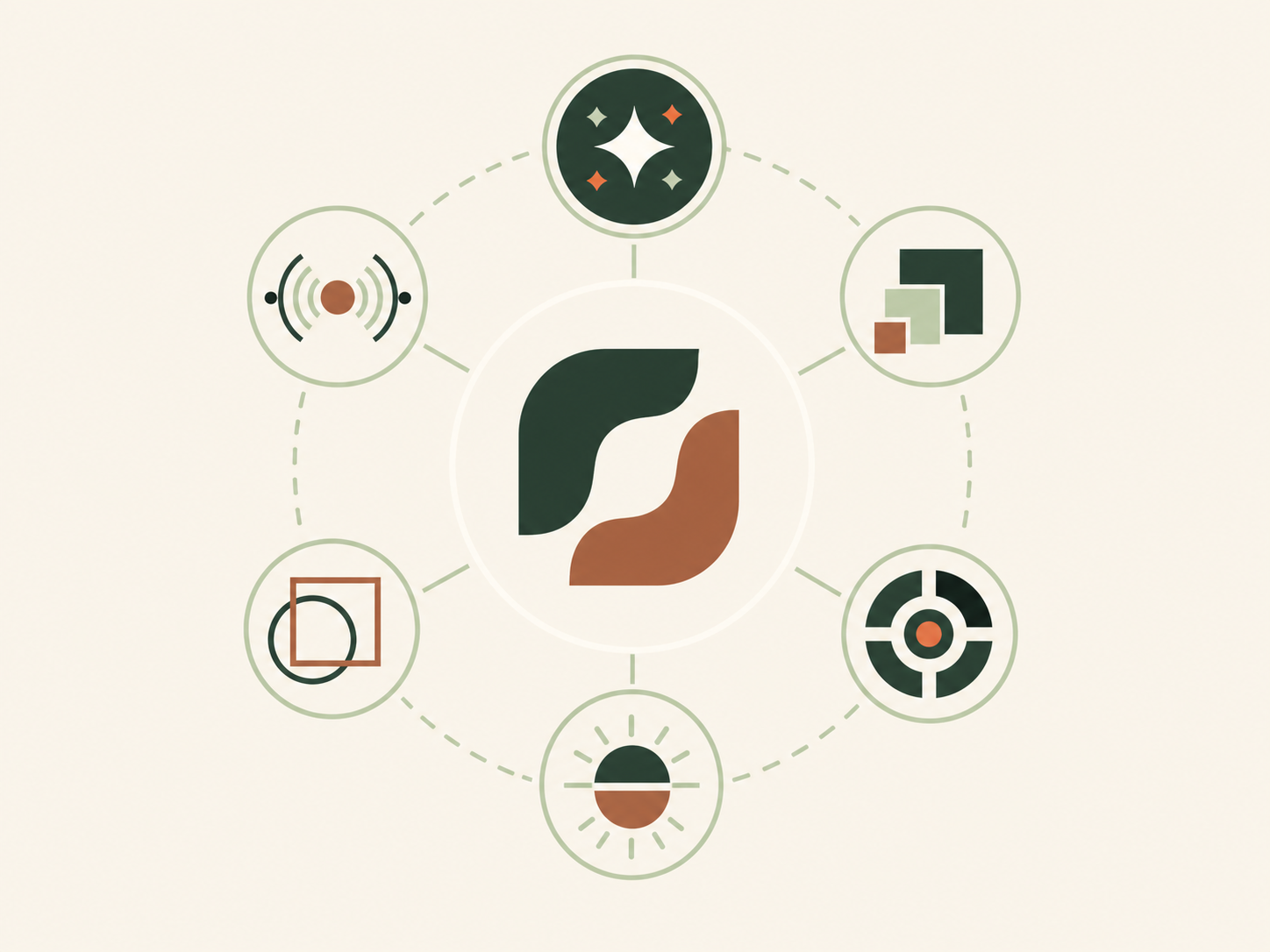
These qualities are design goals, not guaranteed outcomes. A small one-color test reveals reproduction problems, but does not establish originality, audience fit or commercial success. Test full-name and symbol variants separately in their intended contexts.
Is a logo the same as a brand?
The logo identifies; visual identity organizes the logo, colors, typography, imagery and usage rules; the brand experience includes what the business actually delivers. These layers affect one another, but changing an image does not repair a late delivery or an unclear offer.
What kinds of logos are there?
Logos come in a few recognized forms — wordmarks, lettermarks, symbols, abstract marks, mascots, combination marks, and emblems — each suited to a different name and use. If you are choosing a direction, see the seven types of logos and how to choose, and the parts of a logo for the vocabulary designers use.
Where do you use a logo?
Almost everywhere the brand appears: website headers and favicons, app icons, social profiles, email signatures, business cards, invoices, packaging, signage, vehicles, and merchandise. That range is exactly why the qualities above matter — a logo is only as good as it is across all the small, awkward places it has to live. When you are ready, here is how to make a logo, step by step.
Concrete example: Soli café across three layers
Soli is a fictional neighborhood café offering takeaway coffee. Its logo is a readable name with a simple cup-like mark. On the storefront, a receipt and the website header, that identifier helps people recognize the business. The full menu, opening hours and service promise belong in clear surrounding information.
Visual identity is the larger system. A green and cream palette, a text font, consistent photographs and fixed space around the logo connect menus, cups and social posts. Use the name beside the symbol on a sign and the symbol alone for a small avatar. The arrangement changes, but the rules keep the identity related. A palette alone is not the whole identity.
Experience means the coffee’s taste, kind answers, accurate opening hours and orders ready for collection. Customers can recognize Soli and still avoid returning after a bad visit. Redrawing the cup would not solve that operational problem. Good service also needs recognizable presentation so people can find it again.
Test each layer. Can a passerby read Soli at the expected distance? Do the menu and profile look like the same business? Does collection match the promise? Check the avatar at 32 px and the receipt in one color, but assess service with customer feedback. Free export reduces file acquisition cost; it does not demonstrate sales growth. Record design changes and business observations separately instead of attributing every order to the logo.
Keep a list of the places where the identifier appears. Assign a person and review date for opening hours, menus and profile images. A coherent presentation needs maintained information as well as consistent graphics.
Related practical guides: Logo testing checklist: 10 checks before you launch
See your logo before you finish typing — it's freeFrequently asked questions
Is a logo the same as a brand?
The logo identifies; visual identity organizes the logo, colors, typography, imagery and usage rules; the brand experience includes what the business actually delivers. These layers affect one another, but changing an image does not repair a late delivery or an unclear offer.
Can a logo be just text?
Yes. A wordmark is a logo built entirely from the styled brand name, with no separate symbol. Many of the world's best-known logos are text-only.
Does a good logo need color?
No. A strong logo works in a single color first. Color is layered on top, but the mark should still read clearly in plain black or white.
Why are logos important?
A familiar sign can help a customer find the correct shop, profile or document. Repeated consistent use can make that sign easier to recognize. Whether the association is positive depends on the product and service behind it. Avoid treating recognition speed or professional appearance as proof of reliability: an unfamiliar symbol may need the name beside it, and a recognizable logo can represent a poor experience.
Does a good logo guarantee more customers?
No. It can support recognition, but results also depend on offer, reach, price and customer experience. Measure those factors separately; a polished symbol is not evidence of sales growth.
What does a free logo export tell me?
It describes the cost and scope of obtaining files, not originality, exclusivity or marketing results. Check the delivered formats and license conditions; reusable catalog assets do not become exclusive because the export is free.
Sources
- What is a trademark? — United States Patent and Trademark Office
- Making a Mark: An Introduction to Trademarks — World Intellectual Property Organization
- IBM Logo and Brand Guidelines: contexts and variants — IBM